

Where Can You Find State Income Tax Forms?
If you live in a state that has personal income tax, when you file your taxes, you need to fill out that state’s corresponding tax form. Texas, for example, does not have personal income tax, but many other states do.
If you’re using tax software like Intuit, these forms may automatically be found for you. But if you do your own taxes, you might need help to find your state’s tax forms. Even beyond personal income tax forms, there are plenty of other important tax-related or official forms dependent on the state that you live in. So where do you find all of these?
State tax forms and more can be found in PDF.Live Forms section. We’ve gathered important tax forms in one place for easy downloading and filling. This forms section connects directly to the PDF.Live editor so that you can fill, sign, and download forms all in one place.
In this guide, we’ll explain what forms you generally need to fill out, the common types of tax forms, how you know which tax form you need, and how to make sure you have the most up-to-date tax form.
Disclaimer: PDF.Live is not a law firm, and we are not attorneys or CPAs. For guidance on your specific situation, consult a qualified employment attorney or tax professional, as form requirements vary by jurisdiction and change frequently.
What State Tax Forms Do I Need?
Forty-one states have separate tax forms for individual income. If you live in a state that doesn’t have individual income tax, you don’t need a state tax form. Every state’s workers are subject to federal income tax, but not every state collects a state income tax for its residents. There are currently 9 states that don’t have income tax*:
- Washington (taxes capital gains income)
- Nevada
- Alaska
- Wyoming
- South Dakota
- Texas
- Tennessee
- Florida
- New Hampshire
If you live in one of these states, this post may not be for you!
State income tax forms use your federally adjusted gross income, which is also found on the IRS Form 1040. Once you find your federally adjusted gross income, you fill out your state income tax form, calculating what you owe based on various state-specific deductions and adjustments.
State income tax forms don’t follow a universal code or naming system, so it can be tricky to find the one that applies to you. PDF.Live makes it easy by organizing tax forms by state.
Where Do I Find State Tax Forms?
The Federation of Tax Administrators has a list of state tax forms online. This site lists all the current year’s tax forms by state. You can find the most up-to-date state income tax form by clicking the Current Year Tax Forms link, which will take you to the corresponding state’s tax website.
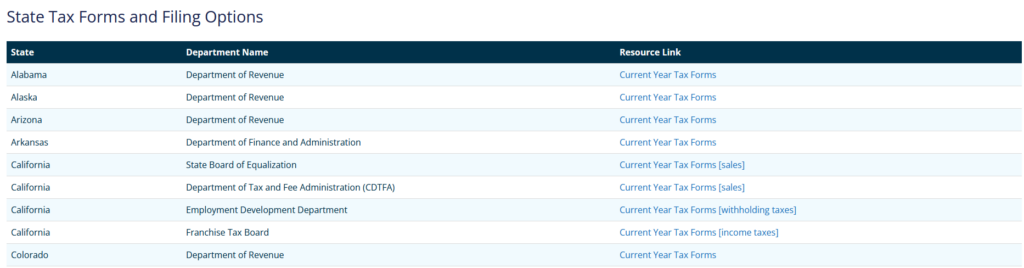
The method to fill out these forms varies from state to state. Some states have set up their income tax forms with fillable form fields so you can fill them out online. In others, you will need to print the form or fill it out with a PDF editor like PDF.Live.
PDF.Live has a database of tax documents, all set up with fillable form fields. The PDF.Live tax form database features tax forms for each state. You can find general income tax documents, income tax return documents, and even state-specific tax documents.
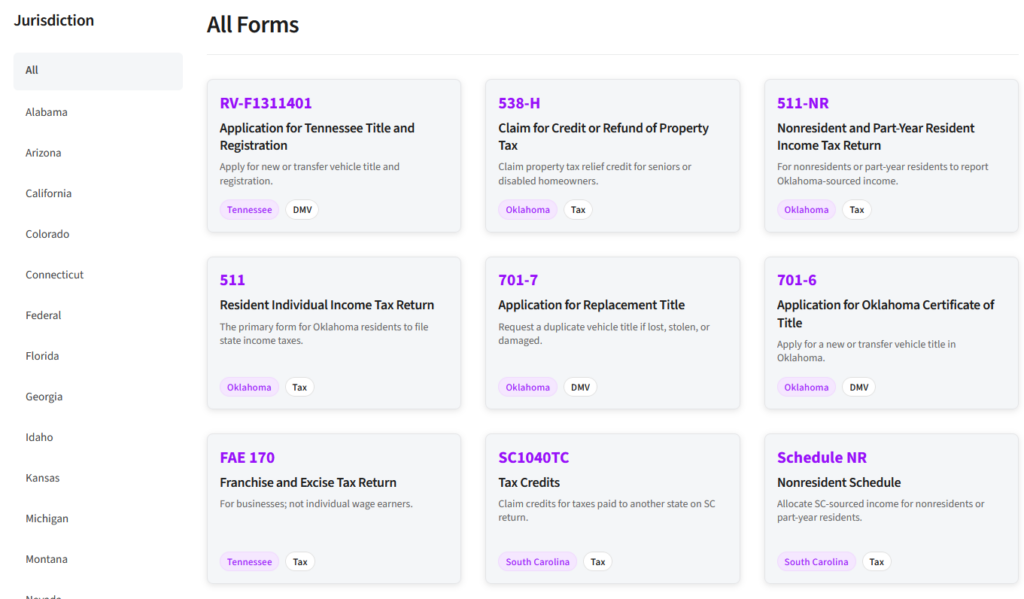
Click on one of these forms to view a preview of it. If it looks correct, you can begin filling it out with PDF.Live. Click Fill this Form to open it in the PDF.Live editor.
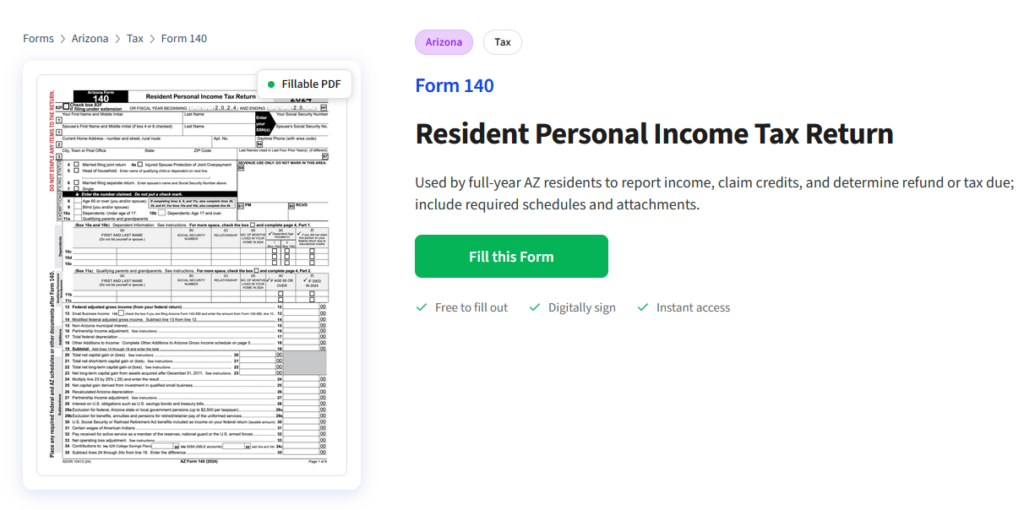
In the editor, you can sign your tax form, fill out the form fields, and print or download it once you’re ready to submit it.
FAQs About State Tax Forms
Disclaimer: We are not legal or financial experts. The answers are based on common knowledge and should be verified with your HR department, tax attorney, or accountant.
What if I work in one state but live in another?
State tax depends on whether you actually work in that other state, or your employer is just based there. If you’re fully remote and never physically work in your employer’s state, you’ll typically only file and pay income tax in your state of residence, even if your company is headquartered somewhere else, as Becker, an organization that prepares professionals for CPA and other exams, explains.
Where it gets more complicated is if you regularly travel across state lines for work, commute to an office in another state, or spend part of the year physically working there. In that case, you may need to file a return in both states: a resident return where you live, and a nonresident return for the state where you worked. You generally won’t be taxed twice on the same income. Many states have reciprocal agreements that let you pay tax only in your home state, and where there’s no agreement, you can typically claim a credit for taxes paid to the other state.
A handful of states (Arkansas, Delaware, Nebraska, New York, and Pennsylvania) also apply a “convenience of the employer” rule, which can require you to pay tax to the employer’s state even if you never set foot there, if you’re working remotely by choice rather than necessity.
Since the rules vary so much by state, and depend on your specific situation, it’s worth confirming the details with your state’s department of revenue or a tax professional before you file.
Are state tax forms different from federal tax forms?
Yes. Your federal tax form (Form 1040) and your state income tax form are two separate documents, and you’ll need to file both if your state collects income tax. Your state form pulls from your federal return — specifically your federally adjusted gross income — but the deductions, credits, and rates it applies are all state-specific. Filing federal forms doesn’t take care of your state taxes, and filing state forms doesn’t take care of your federal taxes. You need both.
Do state tax forms change every year?
Yes, most states update their tax forms annually to reflect new tax laws, adjusted brackets, or updated deduction amounts. Using last year’s form can lead to errors or a rejected return, so always double-check that you’re using the current year’s version before you file. PDF.Live’s forms database is kept up to date with the latest version for each state, so you don’t have to track down the current form yourself. If you’re ever unsure whether a form is current, your state’s department of revenue or taxation is the best place to confirm.
What state departments are responsible for tax forms?
Most states have a department of taxation or department of revenue where you can find information about state taxes. Other names include department of finance and administration, department of treasury, division of taxation. Another often-overlooked resource is your local library: Many local libraries offer physical copies of federal and state tax forms.
*As of July 2026.